
As a company with people and community at its heart, we have always supported a range of charities and voluntary organisations both locally and nationally.
Although we recently marked a decade of support for charity – during which time we have raised more than £40,000 – we are not taking a rest from our fundraising and have been continuing in earnest during 2026.
Many of our team members have taken part over the years in our charity activities and every single one is much appreciated. But no one has taken on a fundraiser quite as challenging as the one that our director and assistant director Samantha Harrison and Mike Herrington have just returned from.
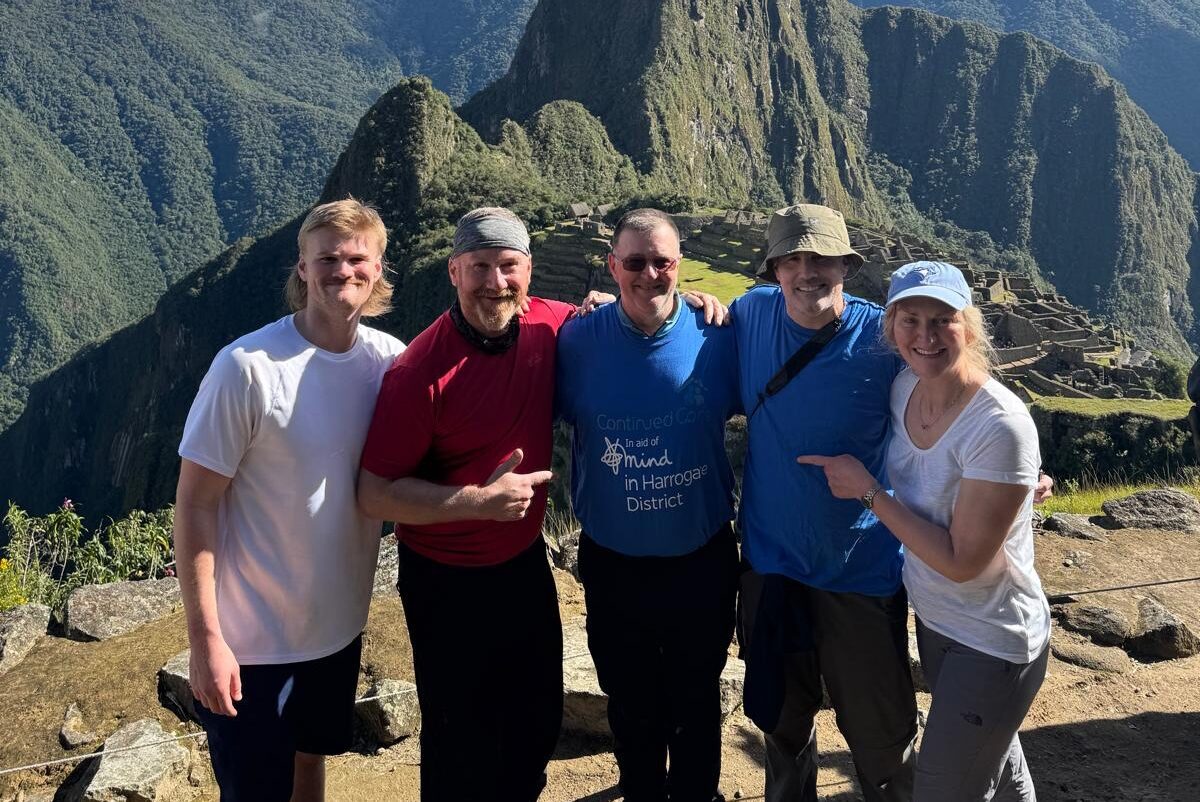
Sam and Mike, along with Olly, Ian and Gareth, undertook a four-day trek to Machu Picchu in Peru, raising money for our Charity of the Year, Mind in the Harrogate District. The organisation supports local people with mental health issues and their families.
Our team hiked through breathtaking Andean scenery, ancient Incan ruins and mountain passes reaching heights of over 4,000 metres. The journey finished with an early morning climb to the Sun Gate to watch the sunrise over the iconic Machu Picchu!
At the time of writing, they have raised nearly £2,000 for Mind. If you would like to make a donation please visit our Just Giving page here.
Read on to learn more about their amazing adventure, written by Sam and Mike.
A Trek in Peru in aid of Mind in the Harrogate District
The start: Cusco
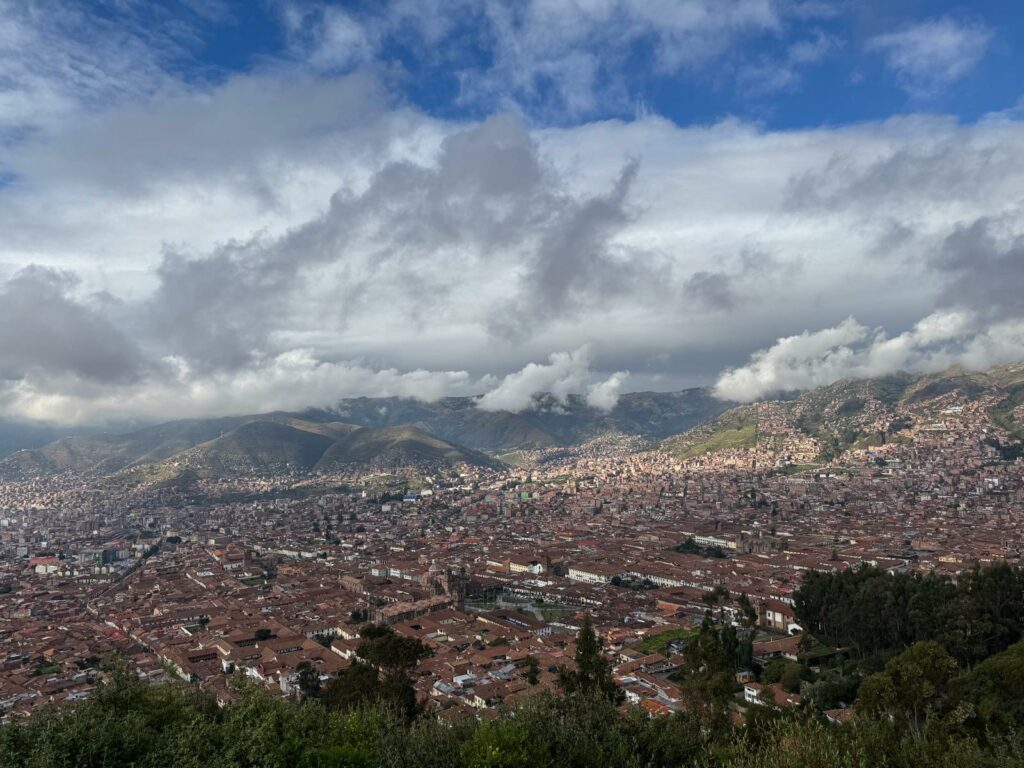
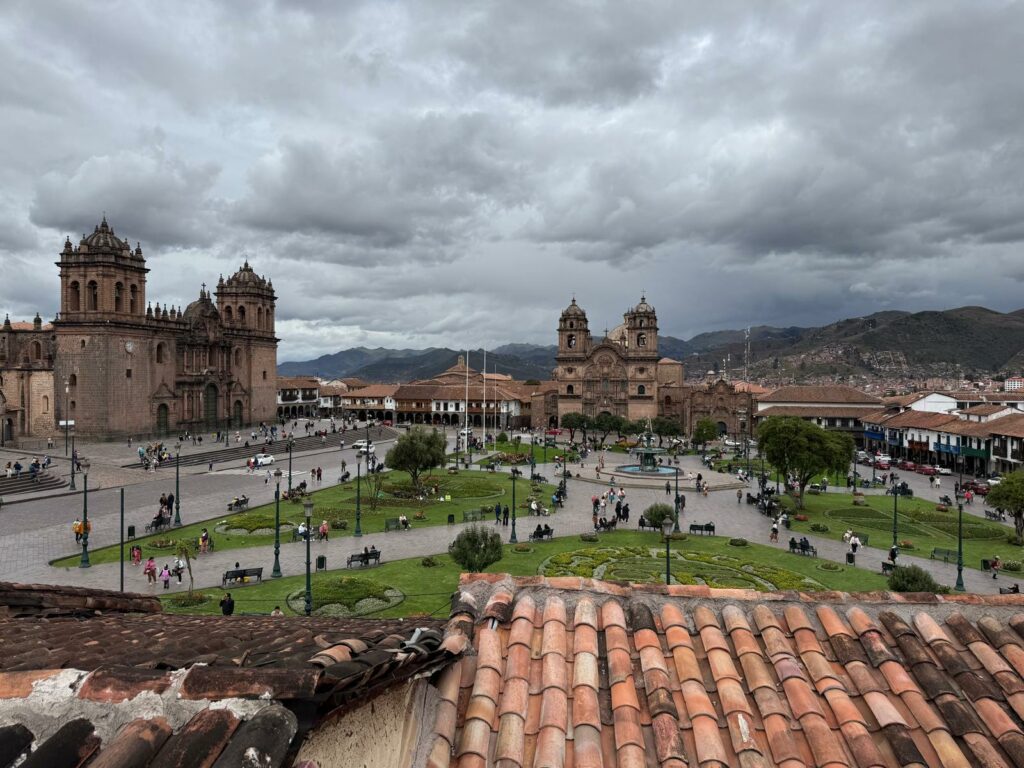
We landed in Cusco, the city located in the Peruvian Andes at an altitude of 3,399 meters above sea level. We soon could soon all feel the effects of the altitude.
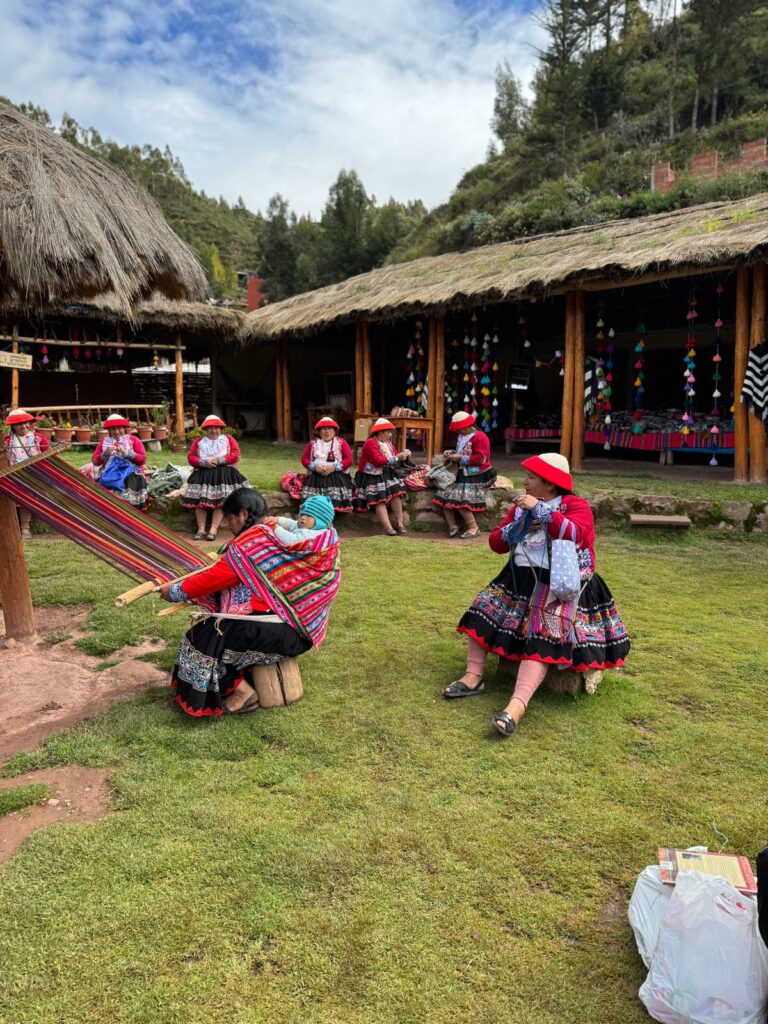
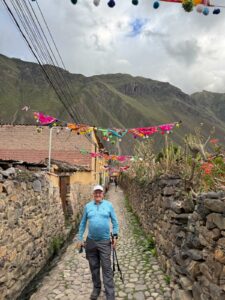
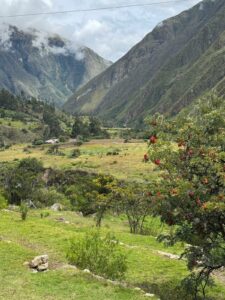
The city was a hive of activity, and we were met by our guides for the trek, Lucy and Effra. We stayed one night and then transferred the next day by bus, making stops along the way as we passed through the gorgeous valley until we arrived at the Ccaccaccollo Community and Women’s Weaving Co-operative.
Here we visited the Ccaccaccollo community centre which travellers’ donations from G Adventures, the company leading our trek, helped create in 2005 to enable local women to sell traditional textiles to travellers.
We observed local weaving and dyeing techniques used to create garments and souvenirs, and learned how the Planeterra weaving co-operative has impacted the community and those who visit it. This includes the purchase of alpacas to provide a steady supply of wool, looms and sewing machines as well as several training courses on production, sales and small business management.
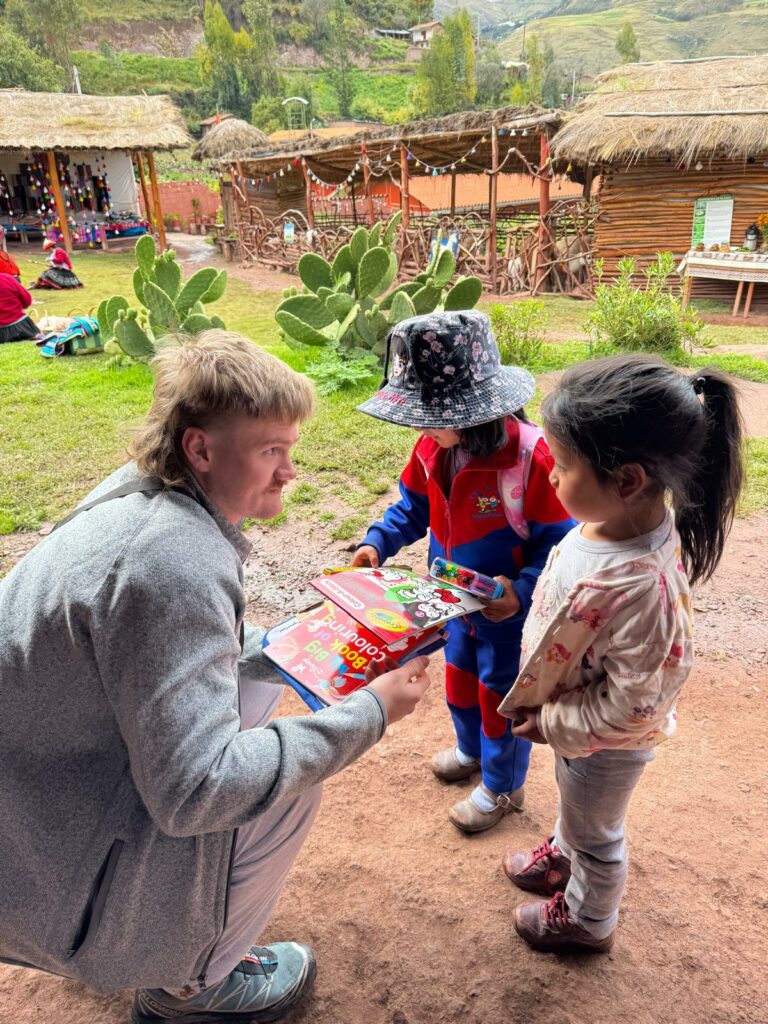
We had brought with us supplies of colouring books, pencils, pens and soft toys, which we handed out personally to the local children from the village, who were thrilled. The village was a big part of our adventure, as it was also where the porters who supported us during our trek came from.
We then moved on to Cuyo Chico Pottery Making in the rural village of Cuyo Chico in the Sacred Valley. This small business was created by a group of families who joined together and is based on their traditional adobe ceramic crafts. Using clay from their surroundings, they mould bowls, plates and all manner of decorations. Surrounded by spectacular views of the learned about the ceramics process as well as the traditional adobe brick-making that forms the basis of houses throughout the valley, all while taking in a spectacular views of the Pisac Ruins. Next stop was Parwa Community Restaurant the Sacred Valley. This sustainable tourism initiative is in Huchuy Qosqo, a small village of families in the Sacred Valley. We discovered how the resident-run restaurant was kickstarted by G Adventures and the Multilateral Investment Fund to become a successful farm-to-table programme that boosts the local economy and several spin-off microenterprises.
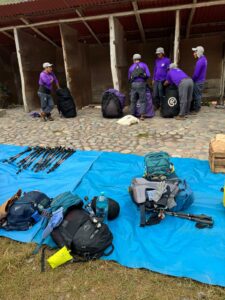
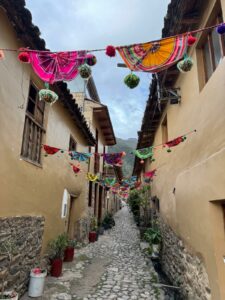
We stayed overnight in a small hotel in Ollantaytambo, and after breakfast at the hotel we had our spare duffle bag weighed. This bag would be carried by the porters and contained a sleeping bag and air mattress plus 2.5kg of our own belongings to make a total of 6kg. Anything else you wanted to take had to go in your backpack.
Hiking, day 1: Ollantaytambo (2792m) – Wayllabamba Camp (3,000m)
Inca trail
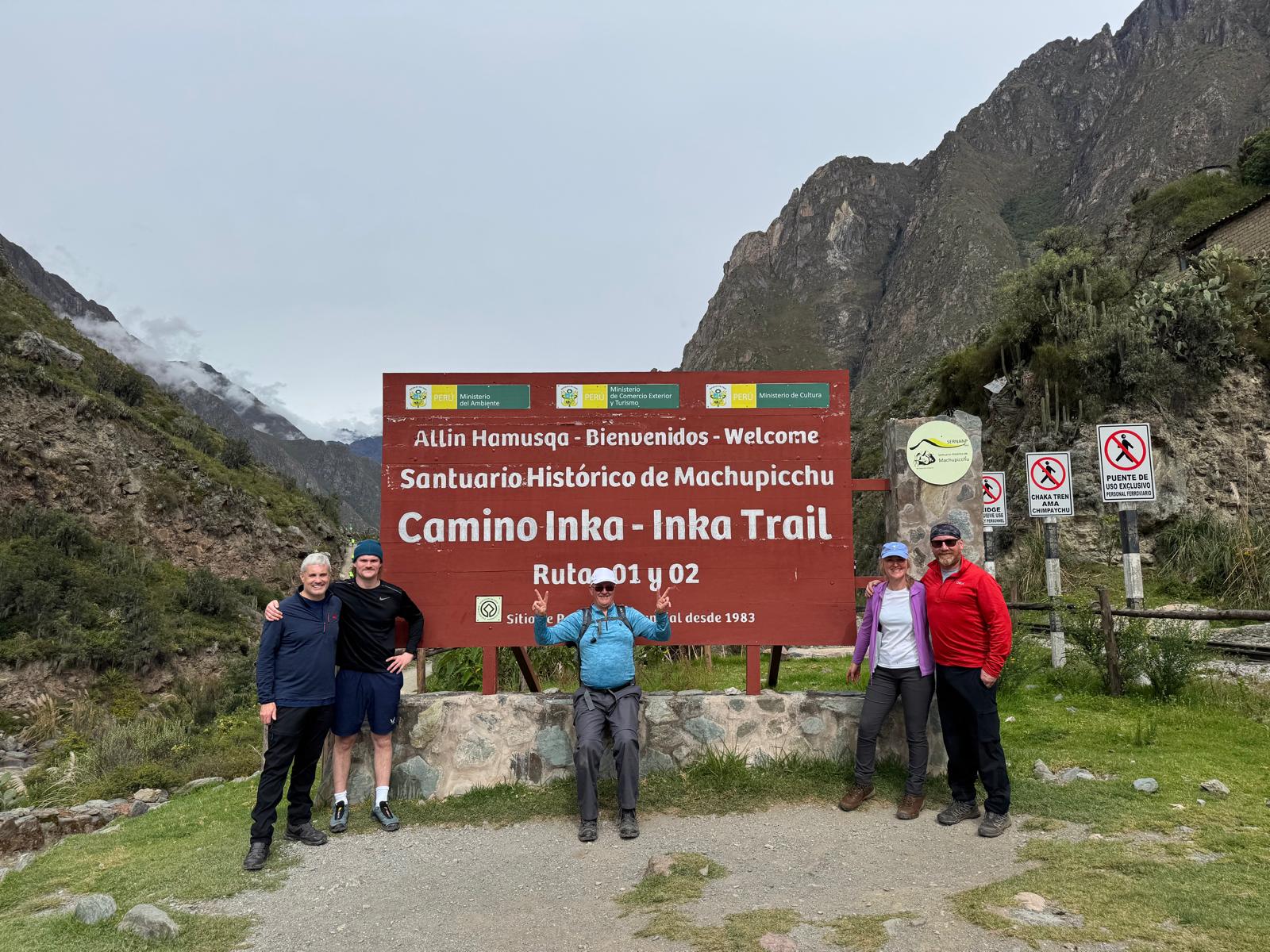
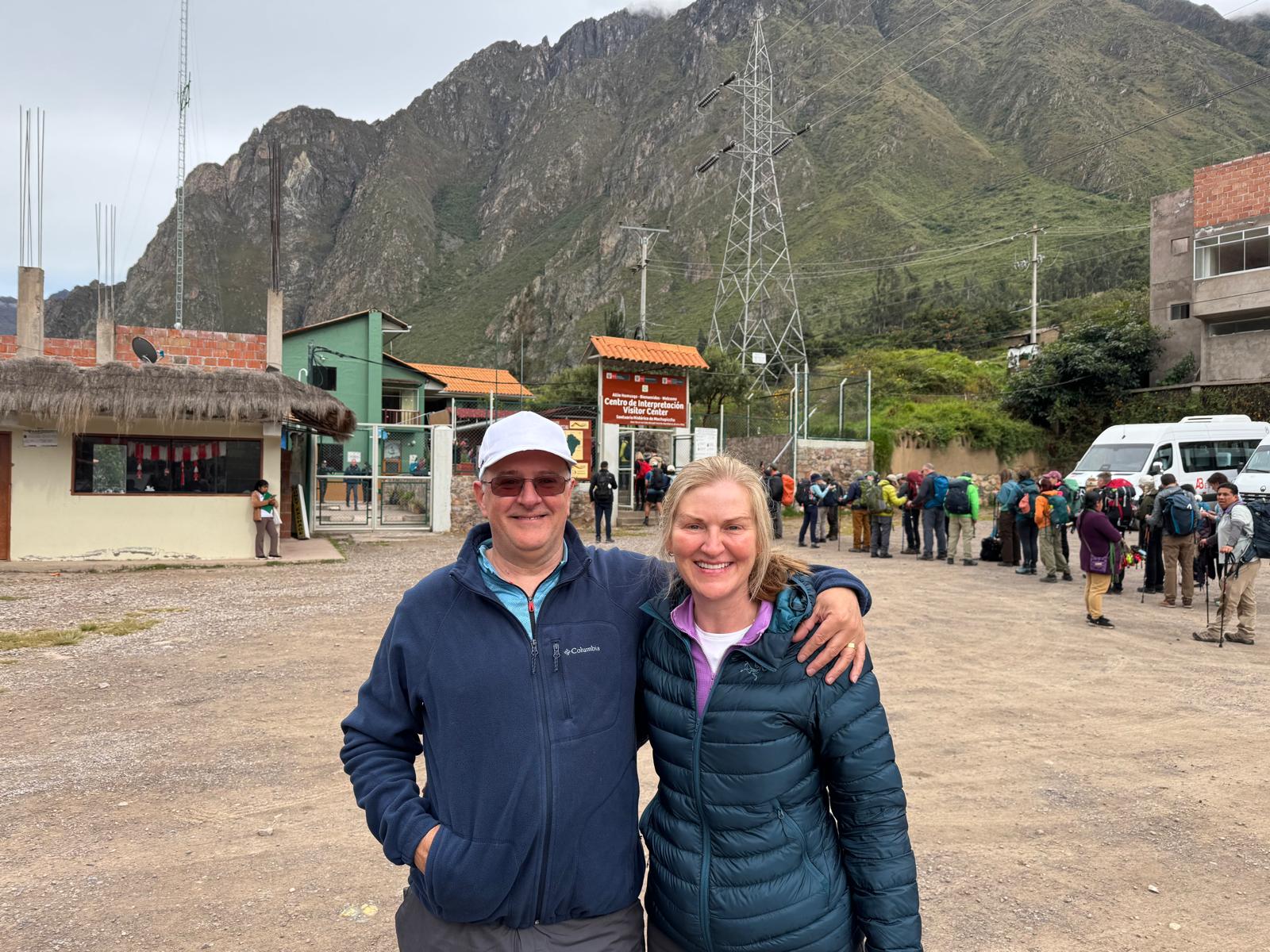
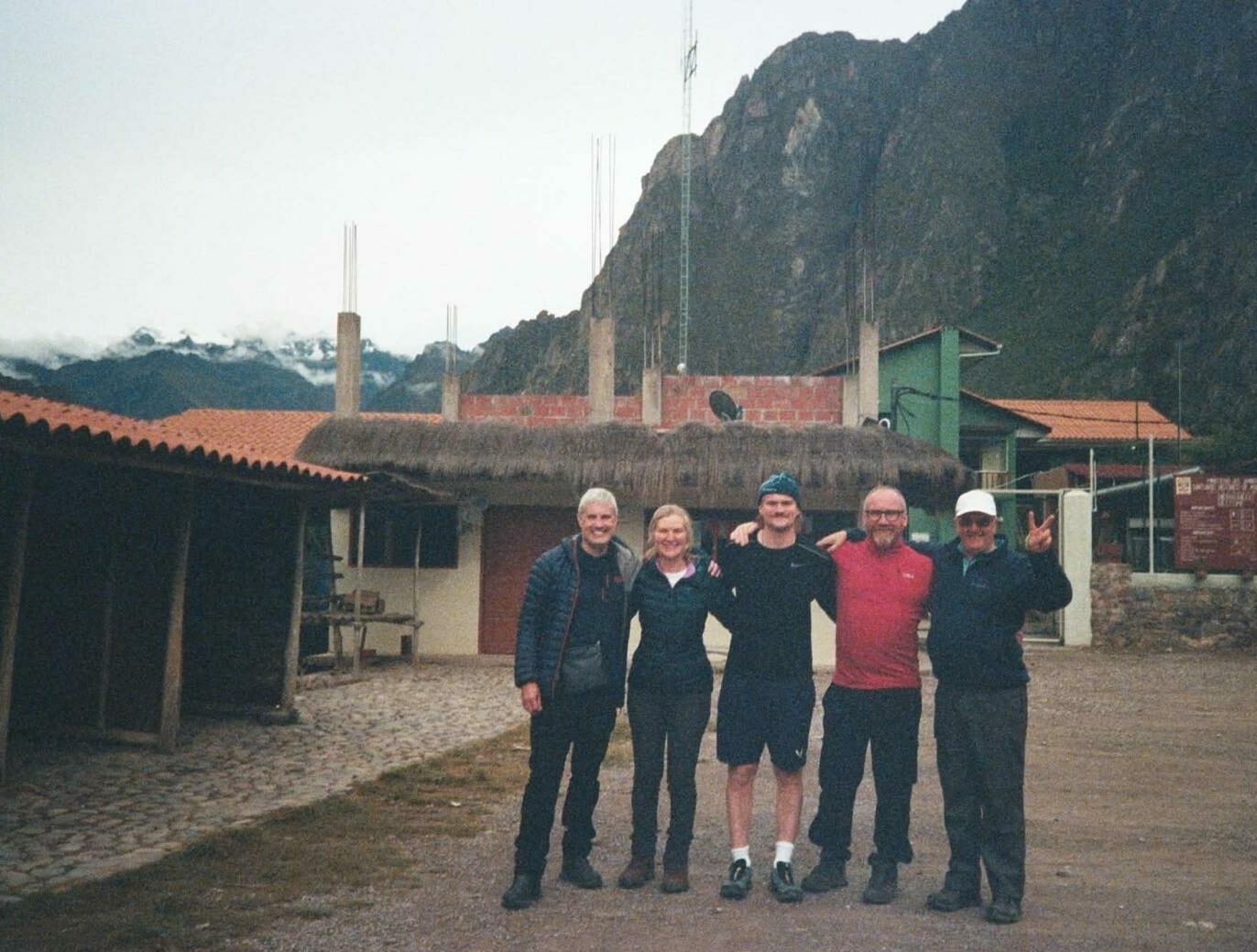
There were 10 of us our group, plus our guides Lucy and Effra. We got a minibus from Ollantaytambo and were transported half an hour to Piscacucho, the start of the Inca trail. We began at 2,792m altitude and had a steady day going to Wayllabamba campsite at 3,100m. The walk in itself took us past some small Inca ruins following a river. After a brief lunch stop at Tarayoc we arrived at the campsite and had covered about 12k or so.
When we arrived at the campsite for the night, the porters had already pitched tents for everyone, blown up air mattresses and put in place sleeping bags. They’d also set up the rest of the camp including kitchen, dining tent, their own sleeping arrangements and whatever else was needed. We all had fun getting to know each other on our trek.
Day 2: Wayllabamba Camp (3000m) – Paqaymayo Camp (3600m)
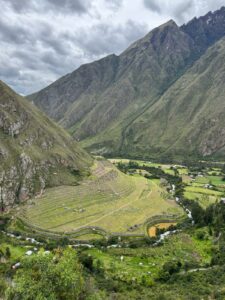
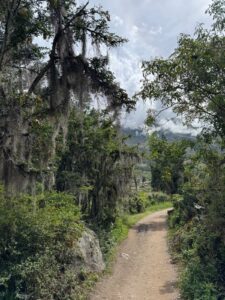
From camp to Warmiwañusca, better known as Dead Woman’s Pass, the highest point of the trail at around 4,200m, an elevation gain of 1,200m. The route is called Dead Woman’s Pass due to the rock formation at the top. It was sufficient to say this is the day everyone had been dreading. The altitude was high and moving and breathing was more difficult. We were awoken early about 04:30am by the porters with a cup of coca tea which is to aid and combat altitude sickness. This morning was all about uphills! We got ready and set off early to climb the long steep path to the highest point of the trek at 4,198m (13,769 ft).
We trekked over progressively spectacular and steeper terrain and in strong Andean weather (blazing sun and fog) around the pass. We took things slowly and drank lots of water along the way and snacks to keep our energy levels up. The amazing views were marred by fog when we eventually reached the top and it was very cold. Ten minutes later as we descended the fog and cloud started to lift, and we were treated to amazing views and warm sunshine once again. Everyone was in good spirits that they had reached the top! We descended to camp at 3,600m and on arrival all the porters formed a line and clapped, cheered and patted you on the back and offered you mint tea on arrival. It was quite emotional!
Day 3: Paqaymayo Camp (3600m) – Wiñaywayna (2650m)
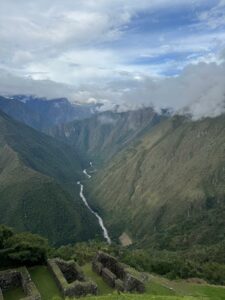
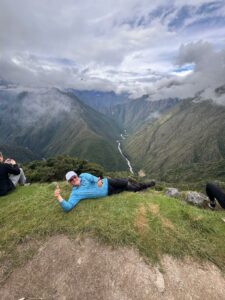
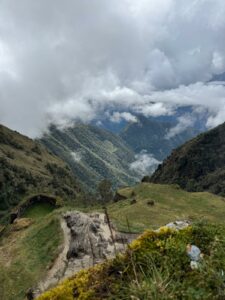
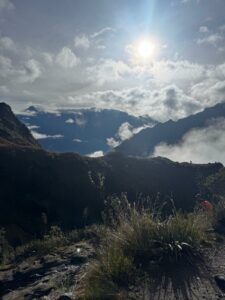
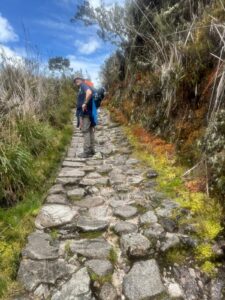
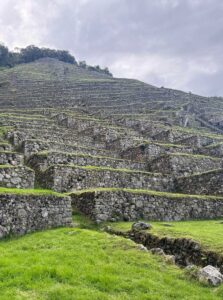
Early start again with the porters waking us up with a cup of coca tea at 5am. This was a long day of walking distance-wise including 2.5km of steep uneven steps downhill – a good job for our poles! We crossed two more passes and ruins on this trek. The first pass, Runquraqay, was at 3,950m (13,113 ft) where we could see a glimpse of the snow-capped Cordillera Vilcabamba. We hiked through the cloud forest on a gentle climb to the second pass of the day, walking through original Incan constructions. The flora and fauna were beautiful, with different colour shrubs and trees and butterflies along the route. The highest point of the pass is 3,700m (12,136 ft). We enjoyed the spectacular views of the Urubamba Valley. At 3,650m (11,972 ft), we reached the ruins of Phuyupatamarca, the “town above the clouds.” And it was another 1.5 hours to the Wiñay Wayna ruins (“forever young”) located at 2,650m (8,694 ft).
We had just arrived back at camp and managed to get into our tents when the heavens opened for about half an hour, with lightning and some right crashes of thunder. This was the first bit of rain we had during the whole trip. It didn’t last long.
Day 4: Wiñaywayna (2650m) – Machu Picchu
Our final day, summit day. We were woken at 03:30am, although we were all ready and wide awake by then. A quick breakfast of bread, jam and hot drinks was followed by a briefing. We were all issued with a sandwich to take with us (we definitely needed this a few hours later!). We set off in the dark at 04.30am with head torches for the short walk from camp to the start of the Sun Gate trail. We waited in line for the rangers to open the gate. The cicadas were making a racket, which we were told is a good sign. Allegedly if frogs are croaking it is going to be cloudy or raining; if cicadas are making a noise it is going to be dry and possibly sunny. We would find out later if this is true!
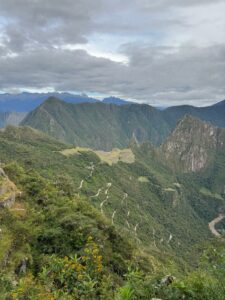
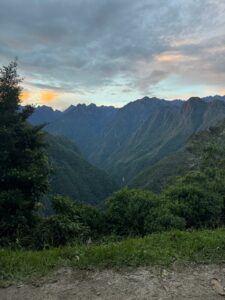
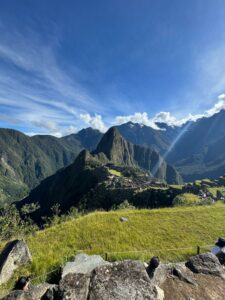
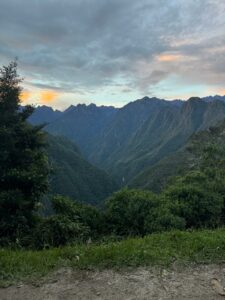
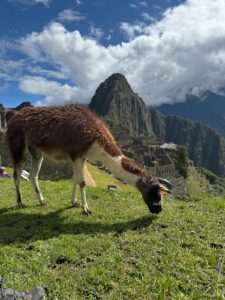
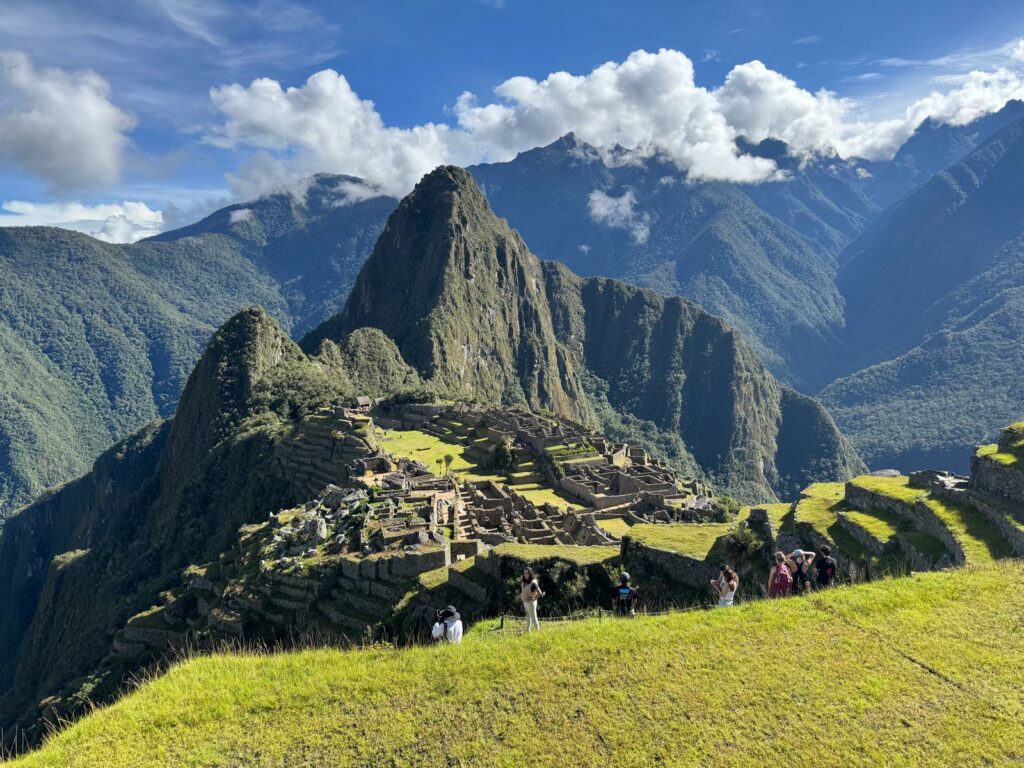
The gate opened at 05.30 and we set off on the trail to the Sun Gate. After about 1.5 hrs we arrived at the gate and had our first view of Machu Picchu. It looked spectacular in the clear morning from Intipunku and the sun was still coming round the mountains. A good few photos were taken, followed by a steady 45 minute walk down to the ruins, all the time getting glimpses of the terraces of Machu Picchu. It was breathtaking. We celebrated with lots of photos and then went on a guided history tour of the city. It truly is spectacular. We were all so proud to have completed the trek and with no injuries. Our group was amazing, and we supported each other along the way. The porters, cook, our two guides and everyone involved in the organisation and preparation of the trek were brilliant.
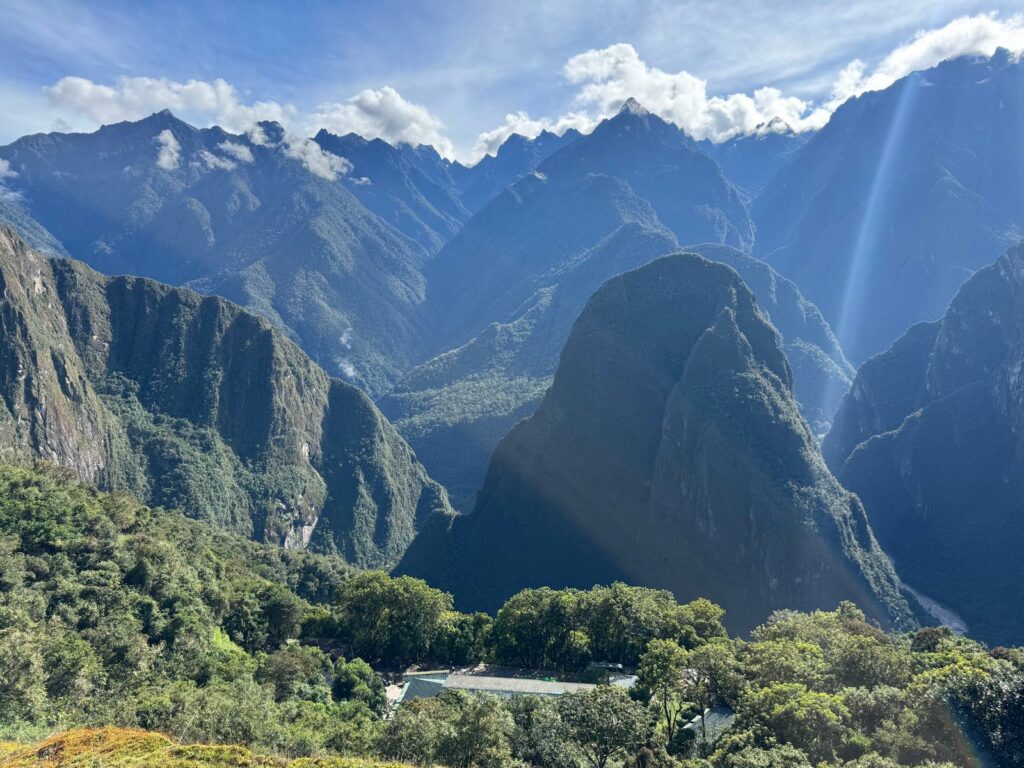
After a couple of hours, we caught the bus outside the Machu Picchu gate for a steep 25-minute downhill ride to Aguas Calientes before the train and minibus ride back to Cusco that evening. It was a long 17 hour day, but we enjoyed every minute of it.
So it turned out the cicadas were right – it had been hot and sunny at Machu Picchu!
Help us reach our fundraising target for Mind in Harrogate
Please help us raise as much money as possible for Mind in the Harrogate district. You can give a donation here – any amount owuld be greatly apppreciated.